
A heat-sensitive item is any product that may be modified by high temperatures or long-term heat exposure. Fullscript takes steps to help protect heat-sensitive products during transit, and understanding how these products are handled — and how to store them after delivery — can help maintain their quality.
Video: Shipping and storing heat-sensitive supplements
Common heat-sensitive product types
Heat-sensitive products include supplements that may be affected by prolonged exposure to warm temperatures. Common examples include:
- Probiotics: Probiotics lose colony-forming units (CFUs) over time when exposed to elevated temperatures. However, probiotics range in temperature sensitivities in that some are shelf-stable and do not require refrigeration, while others require ice packs for shipping and refrigeration for storage.
- Oils: Fish oils, flaxseed oils, and other oil-based products may be labeled heat-sensitive as a precaution to prevent spoilage. Proper storage becomes imperative after opening.
- Softgels: Softgels may soften or stick together when exposed to heat. Storing them in a cool, dry location can help preserve their form and quality. Softgel products typically ship without ice packs, based on supplier guidance.
If softgels arrive stuck together, try putting them in the fridge for 15-30 minutes and giving the bottle a good shake. This is highly effective in separating the gels without damaging the capsules.
Heat-sensitive products are labeled on the product page and in your cart so you’re aware before placing an order.
Ordering heat-sensitive products
Heat-sensitive products are designed to withstand normal shipping and transit conditions. Although temporary exposure to warmer temperatures during delivery is expected, Fullscript takes additional steps to help protect products that require temperature-sensitive handling.
To help minimize time in transit, we recommend selecting our priority delivery option and placing orders earlier in the week when possible. This can help reduce the chance of packages sitting in transit over the weekend.
Heat-sensitive products are labeled in checkout to help you identify eligible items and choose the appropriate delivery method.
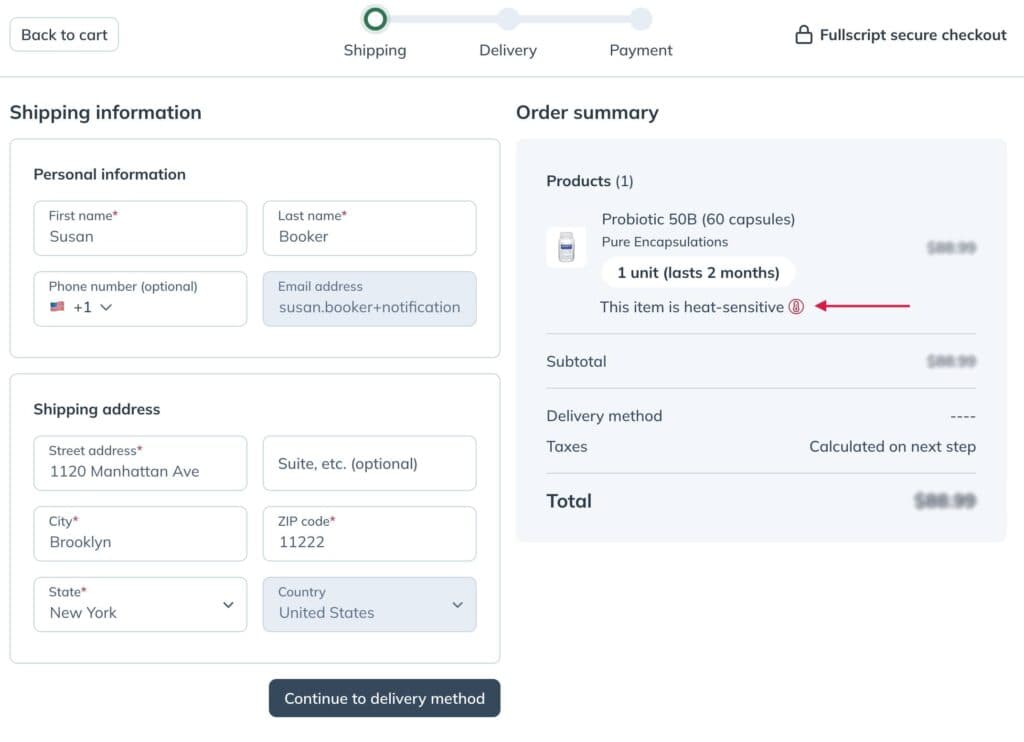
The heat-sensitive product alert in patient checkout.
How Fullscript packs heat-sensitive products
Fullscript uses packing methods designed to help protect heat-sensitive products during transit. Depending on the product, destination, and weather conditions, this may include:
- Insulated packaging or insulated sections within the shipment
- Cold packs when appropriate
- Shipping heat-sensitive orders earlier in the week when possible
Cold packs are designed to slow temperature changes during transit. It's normal for cold packs to arrive thawed, and this doesn't necessarily mean the product was exposed to damaging temperatures.
Additionally, some manufacturers formulate heat-sensitive products with an overage to help compensate for any expected potency loss that may occur during normal transit.
Storing heat-sensitive products
While shipping practices help protect heat-sensitive products during transit, long-term storage has the greatest impact on product quality. At our warehouse facilities, we adhere to rigorous supplement quality control standards that affect how we receive, store, and ship products.
You may keep a product at home or in your office for months. How you store that product will significantly impact its shelf life, especially in the case of heat-sensitive products.
The following are general guidelines that we suggest you follow:
- Bring packages inside as soon as possible after delivery.
- Follow the storage instructions on the bottle – not all heat-sensitive products will need refrigeration.
- Moisture leads to mold – leave cotton balls or silicon packets inside the bottle.
- Close the lids on all containers tightly.
- Store supplements in a cool, dry place away from heat, humidity, and direct sunlight. Avoid storing supplements near windows, appliances, or in areas like kitchens or bathrooms.
Proper storage after delivery helps maintain product quality and potency.
If you have questions about a specific heat-sensitive product or its stability, contact the manufacturer directly for product-specific guidance.